So this one time..
During my study and research, I found some interesting terms which are used to describe different properties of music and materiality.
AFFORDANCE:
Affordance is defined as a quality or property of an object that defines its possible uses or makes clear how it can or should be used.
“The notion of ‘affordance’ allows us to make a statement for the role of musicality in human evolution, it has been introduced in musical studies to highlight the link between hearing music and body movement and particularly to develop a richer understanding of what musical experience and perception entail in relation to the sonic world.”
Reference: https://www.researchgate.net/publication/327888912_Musicality_as_material_culture
COMMODITY:
Some people talk about music and materiality in the forms of:
- Storage: Compact Discs (CDs), Vinyls and records, Cassettes.
- Collection: Music Posters, Musical instruments, signed merchandise from favourite bands and artists, vintage items.
- Distribution and Consumption: Audio players like Radio, Gramophone, Walkman, iPods and also streaming services.
It is an interesting way to look at this topic because different people have different methods of connecting to their music.

| (Image Source: http://www.unsplash.com) |
INTERACTION:
- Musicality doesn’t just mean creating and listening to music. It also involves interacting with others and the world around.
- People interact with music differently. Some people create music, some sing and perform, some people dance and perform to the tunes and some people play different musical instruments.
- Interestingly, creating a musical instrument can also be known as ‘interacting’, as it involves carefully working on the material and looking into the physics of sounds it produces and tuning and also maintaining its audio properties.
- When people use music for celebrations and festivals, it becomes a very social event and it can be cultural as well.
- Many cultures in the world use music for communicating their teaching and values, which somehow gives it importance from traditional point of view too.
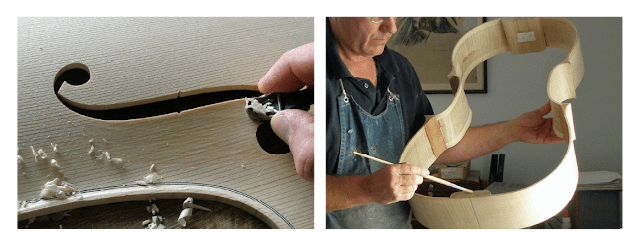
Reference :https://www.researchgate.net/publication/327888912_Musicality_as_material_culture
MATHEMATICAL APPROACH:
- In my previous post, I wrote about the works of Joseph Muller-Brockmann.
- His works show how he looked at music (and arts) in mathematical way, and based on natural laws.
- Mathematics is also known as the language of the universe, and that it governs the scientific laws too.
- We as human, are naturally able to recognise patterns and synchronise with certain patterns in the world, and again patterns are mathematical in nature, so we are receptive to some harmonies in the nature.
- The image below shows how Josef Muller-Brockmann worked on his concert posters using mathematical laws, carefully calculating the visual properties of the elements on the poster.

Reference: Muller-Brockman, J. Grid Systems in Graphic Design: A Visual Communication Manual for Graphic Designers, Typographers and Three Dimensional Designers, (p.165)
BEATS AND SYNCHRONIZATION:
- It is believed that, we have an inbuilt quality of responding to notes, because our heart beats in a certain
- Knapping is a process of shaping the flint and obsidian and other stones. The repeated act of shaping these stones with your own hands, creates or stores a ‘muscle memory’ in different parts of our body, which is then carried on forward, generations after generations.
- There is a possibility that the ancient process of tool-making ‘might have fostered the development of specific forms of listening, discrimination and production of some acoustic properties of stones.’
- Our musicality may have been ‘cultivated as a part of different processes of construction and evolution of different abilities, shaped by the physics of sound distinction and production, rhythmic body motions and synchronisation.’

Dr. Victoria Williamson talks about music psychology in her blog:
- “There are plenty of data out there suggesting that music can trigger strong emotions. Based on this many have drawn the conclusion that music also impacts upon our nervous system. Specifically, the Autonomic Nervous System (ANS).”
This further suggests how music can evoke certain responses in the users and the audiences.
Reference: http://musicpsychology.co.uk/the-beat-and-the-body/
MATERIALITY & MUSICALITY:
Musicality is very closely related to material culture because of the variety of materials used to design and create the musical instruments.
The idea of using different materials and experimenting with different materials and manufacturing techniques is interesting because it is all done to make sure the listener is having a better experience than before. Different materials have different properties and produce different sounds. This can sometimes depend on the type of music played or what type of story is being told.
It can be said that material culture contains all the tactile elements that make up a civilisation, like entertainment, cuisine, art, fashion, and also music. But the way materials add a certain character to the instruments really enhance the overall message.
- The term materiality relates to the physical properties and qualities of an object.
- It also relates to its functionality as a communication tool and also the relationship of the physical properties and its user.
- Musicality is ‘sensitivity to, knowledge of, or talent for music’ or ‘the quality or state of being musical’ and is used to refer to specific if vaguely defined qualities in pieces and/or genres of music, such as melodiousness and harmoniousness.
Source:
Wikipedia contributors. (2022, May 22). Musicality. In Wikipedia, The
Free Encyclopedia. Retrieved 02:16, December 13, 2022, from https://en.wikipedia.org/w/index.php?title=Musicality&oldid=1089252806
CONCLUSION:
- Musicality is not just about creating and listening music
- The act of creating musical instruments and playing those instruments with different techniques is essential for understanding the true essence of musicality.
- Materialistic nature of music can be defined in the forms of its storage, collection, storage, usage, consumption.
- Interacting with the instruments and music in the form of its creation, recording, listening, dancing, celebrations and even meditation improves the user/audience experience.